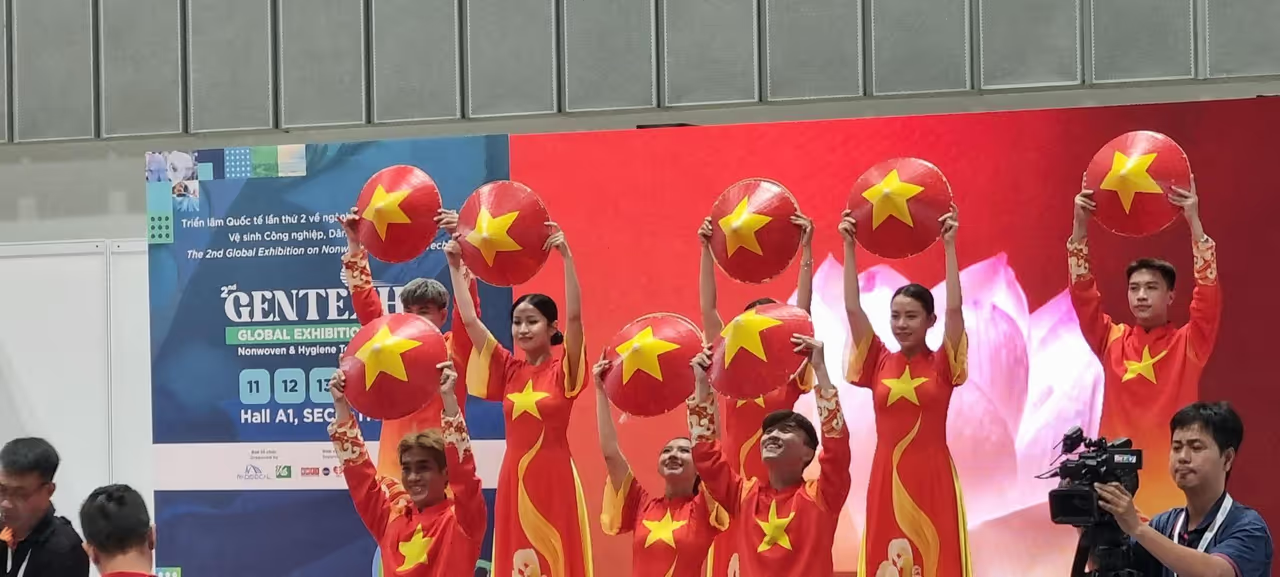
Key Insights from the Asia Nonwoven & Hygiene Development Forum 2026
The Asia Nonwoven & Hygiene Development Forum 2026, held in Ho Chi Minh City, brought together industry leaders, technology providers, regulators, and market specialists to explore the future of nonwoven materials and hygiene products across Asia.
Organised by Shanghai Pharma Consulting, the three-day event provided a platform for discussions spanning the entire value chain — from raw materials and roll goods through converting technologies and packaging to finished hygiene products. The overarching focus: how innovation, regulation, and evolving consumer expectations are transforming the nonwoven and disposable hygiene landscape.
Day 1: Innovation in Materials, Markets and Sustainability
The forum opened with a series of technical and market-focused presentations addressing key developments shaping the industry.
Regulatory outlook for wet wipes was a prominent topic, including developments within ISO TC 224 and the evolving UK–European regulatory framework. These trends are increasingly important for manufacturers exporting hygiene products to international markets, highlighting the growing emphasis on wastewater compatibility and product testing methodologies.
Material innovation took centre stage with presentations exploring MPM (wood pulp meltblown spunbond) composite materials, demonstrating how these structures can enhance both wet wipe performance and absorbent hygiene product cores.
Asia's adult incontinence sector featured strongly, with market insights showing how demographic changes and rising consumer expectations are driving demand for higher-performance products across the region.
Advances in fine denier spandex and innovative bonding solutions were highlighted, enabling improved elasticity, comfort, and product functionality. Meanwhile, sustainability-focused sessions explored next-generation wipes designed to biodegrade while maintaining product performance — reflecting the industry's increasing commitment to responsible material innovation.
The day concluded with a welcome reception and VIP gala dinner, providing an excellent networking opportunity across the nonwoven and hygiene value chain.
Day 2: Designing Hygiene Products with Disposal in Mind
The second day featured a broad technical programme covering biodegradable superabsorbent polymers, ultrasonic bonding technologies, elastic nonwoven materials, and innovations in absorbent cores.
A highlight was the panel discussion tackling a critical industry challenge: "Designing Nonwoven Products with Disposal in Mind: Recycling, Compostability, Biodegradability and Flushability — Development & Challenges."
The panel addressed several pressing questions:
- Are sustainability claims aligned with the realities of waste management and wastewater infrastructure?
- Can flushable products be developed at scale without compromising performance?
- Is mono-material design the future for hygiene products, or will hybrid structures remain necessary?
- Should the industry prioritise recyclability or biodegradability?
- Are sustainable nonwoven solutions economically scalable?
A recurring theme was the need to align material innovation, product design, regulation, infrastructure capability, and market economics. Progress in sustainable hygiene products requires collaboration across the entire value chain.
Consumer education emerged as another important topic. Even well-designed products can cause environmental and infrastructure problems if disposed of incorrectly. The message remains clear: the toilet is not a trash can. Products not designed to be flushed should never enter wastewater systems.
Equally, the term "flushable" must be used responsibly — products marketed as such should demonstrate compliance with recognised regional testing methodologies and be suitable for the wastewater systems where they are used.
The discussion also highlighted the critical gap that often exists between laboratory testing and real-world product performance, particularly in relation to flushability and end-of-life behaviour.
Day 3: Market Expansion and Value Creation in Asia
The final half-day focused on market development and strategic growth opportunities across Asia.
Vietnam was highlighted as an increasingly attractive destination for international companies seeking to expand in Southeast Asia, with presentations demonstrating how the country is becoming a strategic gateway for global SMEs entering regional markets.
Attention also turned to India's rapidly evolving disposable hygiene sector, where the market is transitioning from high-volume growth toward value-driven innovation, improved product performance, and stronger brand differentiation.
Packaging was identified as an important lever for brand positioning — premium packaging solutions can help hygiene brands stand out in an increasingly competitive Asia-Pacific market.
Advancements in nonwoven equipment and manufacturing technologies rounded out the programme, showing how process innovation can deliver improved efficiency, product performance, and value creation for hygiene product manufacturers.
The forum concluded with the Innovation Awards, recognising achievements across the entire nonwoven and hygiene value chain — from raw materials and additives to converting technologies, packaging, and finished products.
Looking Ahead
The Asia Nonwoven & Hygiene Development Forum 2026 highlighted the scale of innovation taking place across the hygiene industry. Key takeaways include:
- Sustainability must be grounded in reality — supported by realistic infrastructure and disposal systems, not just aspirational claims.
- Regulation is shaping global trade — evolving frameworks and testing methodologies will increasingly determine market access.
- Asia's growth story is shifting — from volume toward value, differentiation, and performance.
- Collaboration is non-negotiable — practical, scalable solutions require partnership across the entire supply chain.
Events like this play a vital role in bringing together stakeholders from across the sector to share insights, challenge assumptions, and accelerate progress.