Beyond Plastic: The UK Wet Wipes Ban May Only Be the Beginning
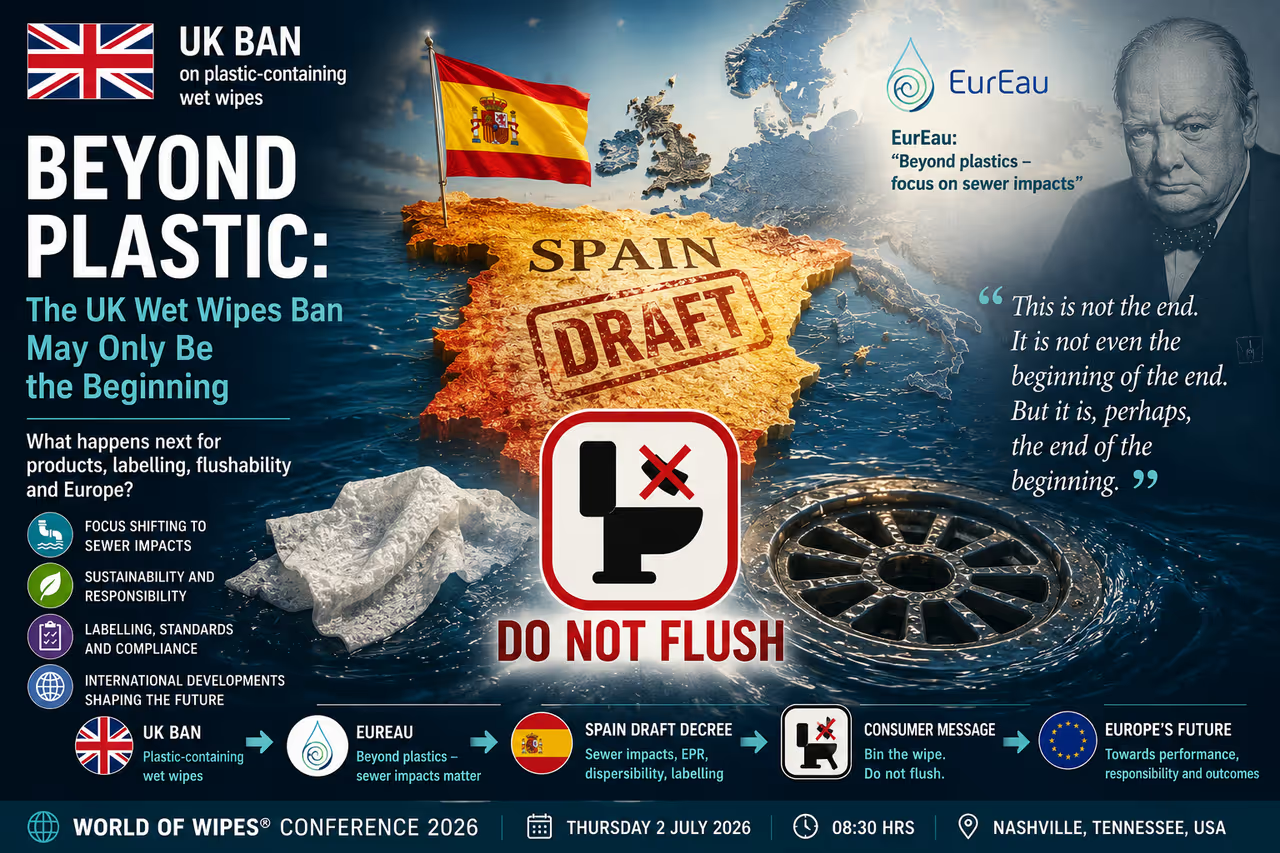
David E. James, LLM, PgDip, APkgPrf, CText FTI, MIMMM — World of Wipes® Conference 2026, Thursday 2 July 2026, 08:30, Nashville, Tennessee, USA.
Download the full presentation slides (PowerPoint)
For many observers, the United Kingdom's decision to ban the sale and supply of wet wipes containing plastic appears to represent the culmination of a long environmental campaign.
However, after reviewing recent legislation, parliamentary debates, wastewater policy developments, international standardisation work and emerging European regulatory initiatives, I have reached a different conclusion.
The UK ban may not represent the end of the regulatory journey for wet wipes.
It may simply be the beginning.
A Market That Had Already Changed
One of the most interesting aspects of the UK ban is that much of the consumer retail market had already transitioned away from plastic-containing wet wipes before legislation was enacted.
Major retailers including Tesco and Aldi had already converted their own-brand wipe portfolios to plastic-free materials years before the regulations entered into force.
Today, the UK retail wet wipe market is overwhelmingly supplied using cellulosic materials such as viscose, lyocell and pulp-based blends.
This raises an important question:
If material substitution has already occurred, why does regulatory attention continue to intensify?
The answer increasingly appears to lie not in plastics alone, but in what happens after a wipe is used.
The Growing Influence of Wastewater Policy
A recurring theme emerging from UK parliamentary debates, the Independent Water Commission (Cunliffe Review), and the Government's 2026 Water White Paper is concern about sewer misuse.
Across political parties there was remarkable consistency in the message delivered to consumers:
Bin the wipe – do not flush.
Parliamentary discussions repeatedly highlighted concerns regarding:
- Sewer blockages
- Fatbergs
- Pump failures
- Sewer flooding
- Wastewater treatment costs
- Environmental pollution
Perhaps most significantly, these concerns were frequently expressed in relation to all wet wipes, not merely those containing plastic.
The policy narrative appears to be evolving from:
Does the product contain plastic?
towards
What impact does the product have on the wastewater system?
That is a potentially fundamental shift.
The End of "Fine to Flush" in the UK
The UK water sector has moved decisively towards a simple public message:
Only Pee, Poo and Paper should be flushed.
This position has been reinforced by the withdrawal of the UK's long-established Fine to Flush certification scheme.
The result is a significant change in emphasis.
For many years, the debate centred on improving product flushability.
Today, the focus increasingly centres on keeping wipes out of the sewer network altogether.
Whether this approach will remain confined to the UK or influence wider international policy remains an open question.
Europe May Be Heading in a Different Direction
One of the most interesting developments currently occurring in Europe can be found in Spain.
Spain's draft Royal Decree on wet wipes and balloons goes beyond a simple distinction between plastic-containing and plastic-free products.
Instead, it places substantial emphasis on:
- Sewer system impacts
- Disposal behaviour
- Wastewater costs
- Product dispersibility
- Extended Producer Responsibility
The proposal also references Spain's existing flushability standard, UNE 149002.
This suggests that some European policymakers may be moving beyond material composition and increasingly focusing on product performance within wastewater systems.
The distinction is important.
A plastic-free wipe may still create operational challenges within sewer networks.
Conversely, a product designed specifically to disperse within wastewater systems may be viewed differently by regulators.
This debate is likely to become increasingly important as the European Commission evaluates the Single-Use Plastics Directive ahead of its 2027 review.
The EurEau Signal
The position adopted by EurEau, representing Europe's drinking water and wastewater service providers, may provide an important indication of future regulatory direction.
In its recent feedback to the European Commission, EurEau argued that the current distinction between plastic-containing and plastic-free products does not adequately reflect real-world impacts.
Instead, EurEau called for greater consideration of:
- Dispersibility
- Disintegration behaviour
- Sewer compatibility
- Wastewater system performance
This may prove to be one of the most significant developments currently occurring within European policy discussions.
ISO and the International Dimension
At the same time, the international standards community continues to examine how wipes interact with wastewater systems.
In May 2026, ISO DTS 18671 received sufficient support from participating countries to proceed towards publication.
The Technical Specification addresses methodologies for assessing compatibility with wastewater collection and treatment systems, alongside appropriate labelling considerations.
While the future direction of ISO activity remains uncertain, the work highlights a broader international reality:
The debate around wet wipes is no longer confined to plastics.
It increasingly encompasses wastewater infrastructure, consumer behaviour, product design and environmental outcomes.
What Does This Mean for Manufacturers?
For manufacturers, brand owners and retailers, several implications are emerging.
Future competitive advantage may depend not only upon:
- Material selection
- Plastic-free claims
- Sustainability messaging
but also upon:
- Sewer compatibility
- Product dispersibility
- Consumer disposal behaviour
- Wastewater-related Extended Producer Responsibility obligations
- Labelling compliance
The regulatory landscape is becoming broader and more complex.
Looking Ahead
The key message from my research is straightforward.
The UK plastic wet wipes ban should not be viewed as the final destination.
Instead, it may represent a transition point in a much larger regulatory journey.
The next phase of policy development may focus increasingly on the interaction between wet wipes and wastewater infrastructure.
If that proves correct, the future debate will not simply be about plastics.
It will be about performance, dispersibility, consumer behaviour and the true environmental impact of products after they leave the consumer's hand.
That discussion is already beginning.
And it is likely to shape the future of the global wipes industry for many years to come.
About the Author
David E. James is Principal Consultant at David E. James Consultancy Ltd and has more than 30 years' experience in the global wipes and nonwovens industry. He is a former Chair of the EDANA Wet Wipes Working Group and currently participates in ISO TC224 WG10 on flushable products.
Presentation: Beyond Plastic: The UK Plastics in Wet Wipes Ban and Its Implications for Products, Labelling, Flushability and Europe – The End of the Beginning or the Beginning of the End?
World of Wipes® Conference 2026 — Thursday 2 July 2026, 08:30, Nashville, Tennessee, USA.