
Disposable Wipes and The Circular Economy: Confronting the Pollution Problem
Introduction
As we try to move towards a more sustainable world, attention often falls upon the obvious culprits: fossil fuels, industrial pollution, and excessive plastic waste, among others. However, numerous everyday items fly under the radar of these discussions, despite their significant impact on our environment. One such example is disposable wipes. From baby wipes to cleaning wipes, these products have become a staple in many households due to their convenience and versatility. But this convenience carries an unintended consequence: a growing environmental issue linked to their disposal, especially when they are flushed down toilets. Here at the David. E. James Consultancy we are focused on problem of disposable wipes pollution and believe that key principles of the circular economy can provide solutions.
Disposable Wipes: A Growing Problem
The disposable wipes market has seen tremendous growth over the past decade, driven by consumers' increasing demand for convenience and hygiene. Whether for personal care, house cleaning, or even disinfecting surfaces, these wipes have become indispensable to many.
However, the ease of use comes with a significant environmental cost. A major problem arises when these wipes are flushed down the toilet, an act thought harmless by many consumers. Unlike toilet paper, most disposable wipes do not disintegrate quickly in water. Instead, they contribute to massive blockages in sewer systems, often merging with fats and oils to create colossal 'fatbergs.' These monstrous blockages are a nightmare for wastewater management and can lead to untreated sewage overflowing into waterways.
Moreover, most disposable wipes contain plastic fibres. As the wipes slowly break down, these fibres are released into the environment, contributing to the growing problem of microplastic pollution. These tiny particles can harm aquatic life and ultimately end up in our food chain, with effects on human health that we are only beginning to understand.
Understanding the Circular Economy
To mitigate the environmental impact of disposable wipes and other waste, we must shift our thinking from a linear to a circular model. The traditional linear economic model follows a 'take-make-dispose' approach: resources are extracted, products are manufactured and used, then discarded as waste. This model not only depletes our planet's finite resources but also creates substantial pollution and waste.
A circular economy presents a promising alternative. In this model, the focus is on keeping resources in use for as long as possible. It emphasises the need to reduce waste, reuse products, and recycle materials. Rather than viewing the end-of-life of a product as waste, a circular economy sees it as a new resource that can be fed back into the system.
This transformative approach offers substantial benefits. It can help conserve natural resources, reduce pollution and waste, and create economic opportunities through innovative, sustainable business practices. The concept of the circular economy brings sustainability at the heart of consumption and challenges us to redesign our products, systems, and behaviors.
The Role of Disposable Wipes in a Circular Economy
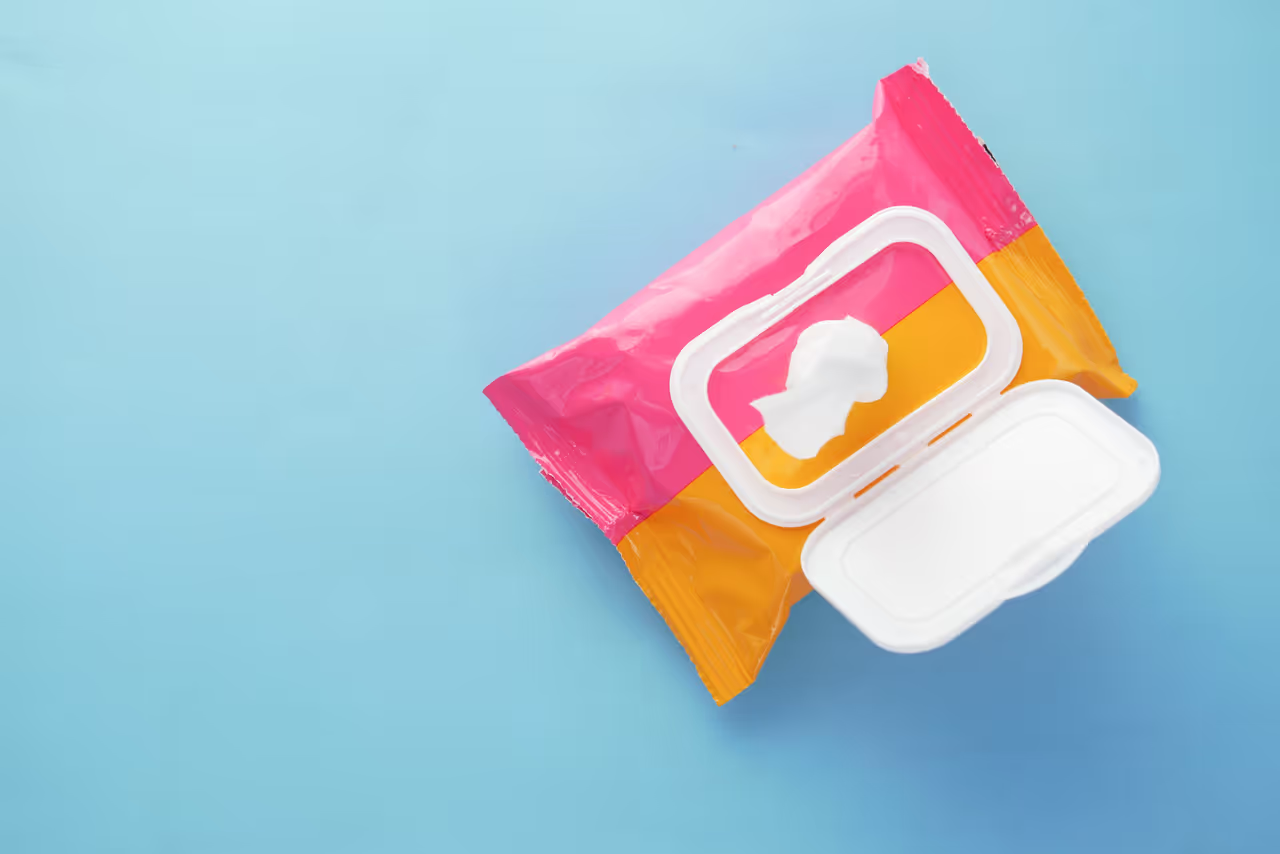
So how can disposable wipes fit into the circular economy? First, we must reconsider how they are designed and manufactured. Can we use more sustainable, biodegradable materials in the production process? Can the wipes be designed for easier recycling? These are the questions manufacturers need to explore.
Furthermore, we need to address how disposable wipes are used and disposed of. Education plays a crucial role here. Many consumers are unaware of the environmental impact of flushing wipes down the toilet. Public awareness campaigns can help change behaviors and promote more responsible disposal.
Finally, we need to consider what happens to the wipes at the end of their life. Current recycling facilities are ill-equipped to handle disposable wipes. Innovation isneeded in this space to develop technologies and processes that can effectively recycle these products, extracting valuable materials that can be reused.
Overall, integrating disposable wipes into a circular economy requires a reimagining of their lifecycle: from design to disposal, every stage offers opportunities for innovation and sustainability.
Challenges and Opportunities
The transition to a circular economy model for disposable wipes, while promising, presents considerable challenges. From a technological standpoint, creating wipes that are both effective for their intended use and environmentally friendly is a complex task. Additionally, setting up infrastructure capable of recycling disposable wipes at scale is another substantial hurdle.
From an economic perspective, businesses need to balance the costs of investing in sustainable practices while remaining competitive in the market. Consumers, while increasingly conscious of environmental issues, are often driven by cost and convenience when choosing products.
There are also social and cultural hurdles to overcome. Changing consumer behaviors, particularly around disposal habits, requires a considerable shift in mindset and a significant public education effort.
Yet, these challenges also represent opportunities for innovation, creativity, and leadership. The growing consumer demand for sustainable products means that businesses investing in eco-friendly practices can gain a competitive edge. Furthermore, companies can foster goodwill and enhance their brand image by demonstrating a commitment to sustainability.
Strategies to Confront the Pollution Problem
Solving the disposable wipes pollution issue requires collective action from various stakeholders. Manufacturers can play a key role by redesigning their products to be more environmentally friendly and easier to recycle. They can also provide clear instructions on packaging about the proper disposal of their products and invest in public education campaigns to change consumer behaviors.
Policymakers, on the other hand, can enact regulations that encourage responsible production and disposal of disposable wipes. They can also provide incentives to companies that invest in sustainable practices and infrastructure.
As consumers, we have a significant role to play as well. By making more informed choices, we can support businesses that prioritise sustainability. Furthermore, we can ensure we dispose of wipes properly and encourage others in our community to do the same.
Case Studies
There are already several pioneering efforts to tackle the issue of disposable wipes pollution. A company in the UK, Natracare, has developed biodegradable wipes made from organic cotton. These wipes are compostable under the right conditions, meaning they break down into harmless substances that can contribute to soil health.
In the US, a public education campaign called "Don’t Flush That" has been effective in reducing the number of wipes found in sewer systems. The campaign uses a mix of humor and shock value to educate the public about the consequences of flushing wipes and other non-flushable items.
These case studies demonstrate that solutions are possible and highlight the importance of innovation, public education, and regulatory support in tackling this issue.
Conclusion
The challenge of disposable wipes pollution is a significant one, but it is not insurmountable. By embracing the principles of a circular economy, we can mitigate the environmental impact of these products and contribute to a more sustainable future.
As we move forward, we must encourage innovation, collaboration, and behavioral change. Manufacturers, policymakers, and consumers alike have crucial roles to play. While the road ahead may be challenging, the rewards are significant: cleaner waterways, less pollution, and a healthier planet for future generations.
We at the David. E. James Consultancy are ready to work with forward thinkig businesses and organisations who wish to play a role in this transition.