Managing Nonwoven Waste: Best Practices for Governments and Organisations
Introduction
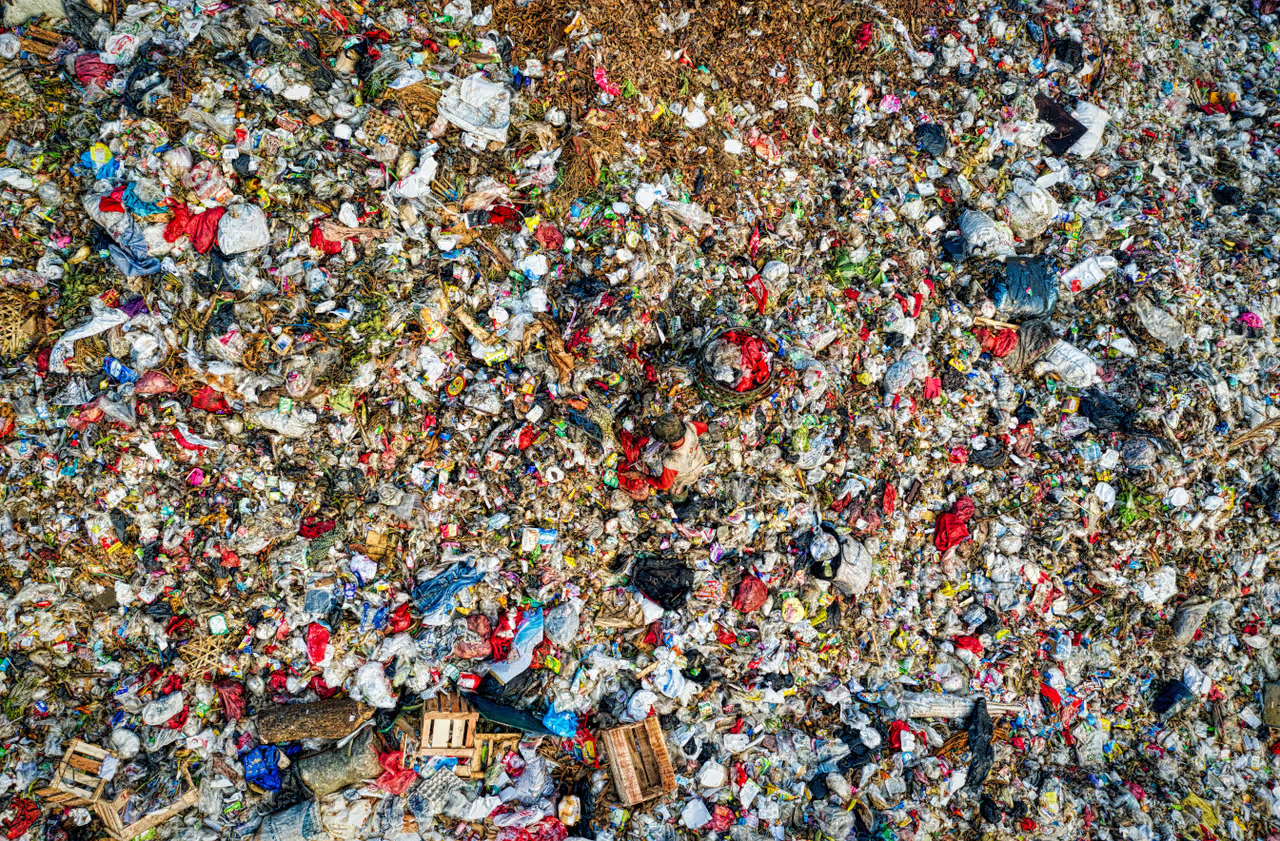
Nonwoven materials, extensively used in industries such as healthcare, hygiene, and automotive, have become a staple in our modern society due to their durability, versatility, and cost-effectiveness. However, the significant waste generated by these materials presents a challenge that requires urgent attention. Nonwoven waste, much of which is not easily recyclable, has a substantial impact on our environment, contributing to pollution and overfilled landfills. Addressing this issue effectively necessitates the collective efforts of various stakeholders, notably governments and related organisations. We explore the roles that both these entities play in managing nonwoven waste, examine best practices, and provide insights into potential strategies for sustainable waste management.
Understanding Nonwoven Waste
Nonwoven materials are unique fabrics made from fibres bonded together through various methods but without weaving or knitting. These materials are chosen for their specific characteristics, including absorbency, resilience, stretch, and sterility. Consequently, they are found in a range of products from disposable diapers and wipes to protective medical gowns and filters in air conditioners.
Despite their benefits, nonwoven materials pose a significant waste management challenge. As they are often designed for single use, vast quantities of nonwoven waste are generated annually. This waste is predominantly sent to landfills due to the lack of viable recycling options, contributing to the environmental burden.
Moreover, nonwoven materials can contain a mix of synthetic and natural fibres, complicating recycling efforts. Some nonwovens are also designed to be highly durable and resistant to breaking down, resulting in long-lasting environmental pollution if not properly managed. Thus, the need to address nonwoven waste management is a pressing concern and a critical part of striving for a more sustainable future.
The Role of Governments in Managing Nonwoven Waste
Governments play a crucial role in managing nonwoven waste. They can establish regulations that mandate responsible waste management, promote recycling, and incentivise the use of more sustainable materials.
Regulatory measures may include laws that mandate the proper disposal and treatment of nonwoven waste. Governments can also impose penalties on improper waste disposal, creating a deterrence against unsustainable practices. Additionally, they can establish guidelines for the design and production of nonwoven materials to ensure they are as environmentally friendly as possible.
Moreover, governments can invest in research and development to explore innovative solutions for nonwoven waste recycling. They can also offer financial incentives to organisations that develop and implement sustainable waste manbut alsoagement practices. These initiatives not only help manage nonwoven waste but also stimulate economic activity and job creation in the green industry.
The Role of Organisations in Managing Nonwoven Waste
On the other hand, organisations are central to the production, use, and disposal of nonwoven materials. As such, they bear significant responsibility for managing the waste associated with these products.
Organisations can take several steps to improve nonwoven waste management. They can invest in research and development to design more sustainable nonwoven materials that are easier to recycle or biodegrade. They can also implement responsible waste management practices in their operations and work with waste management services that prioritise recycling and recovery.
Moreover, organisations can play a crucial role in educating consumers about proper disposal methods for nonwoven products. Through clear product labelling and public awareness campaigns, they can help reduce improper disposal and encourage recycling.
Case Studies: The role of Governments in Managing Nonwoven Waste
Several governments and organisations are already implementing best practices in managing nonwoven waste.
Sweden, for instance, has implemented a tax on waste sent to landfills, encouraging both companies and consumers to recycle more. The government has also invested heavily in advanced waste-to-energy facilities that can generate heat and electricity from non-recyclable nonwoven waste.
In the corporate sector, Kimberly-Clark, a major producer of nonwoven products, launched a recycling program for used disposable garments in cleanrooms and laboratories. This initiative not only reduces waste sent to landfills but also recovers valuable materials for use in new products.
The Intersection of Government and Organisation Roles
In addressing nonwoven waste, the roles of governments and organisations intersect at many levels. Collaboration between the two can result in more effective and sustainable waste management strategies.
Governments can set the policy landscape that encourages organisations to adopt best practices in waste management. They can provide incentives for companies that reduce, reuse, and recycle nonwoven waste, promoting sustainable business practices.
Organisations, in turn, can contribute to policy-making by sharing insights and expertise on nonwoven materials. They can help develop practical, industry-focused regulations that encourage sustainability without stifling innovation and competitiveness.
Public-private partnerships can also be an effective tool in managing nonwoven waste. Governments and organisations can collaborate on initiatives like research and development projects, recycling programs, and public education campaigns. By combining resources and expertise, these partnerships can tackle nonwoven waste more effectively and efficiently.
The management of nonwoven waste represents a significant challenge, but it also presents an opportunity for innovation and collaboration towards sustainability. Both governments and organisations have crucial roles to play in mitigating this issue.
Governments can provide the regulatory framework and incentives that encourage sustainable practices. Organisations, as producers and users of nonwoven materials, have a responsibility to manage the lifecycle of these products in an environmentally conscious manner. Through collaboration, both entities can devise and implement effective strategies to reduce, reuse, and recycle nonwoven waste.
The David. E James Consultancy can offer help and guidance to governments and organisations who seek to manage nonwoven waste effectively and work towards a more sustainable future.