Wet Wipes, Wastewater Systems and ISO Standards: Key Insights from the Asia Nonwoven & Hygiene Development Forum
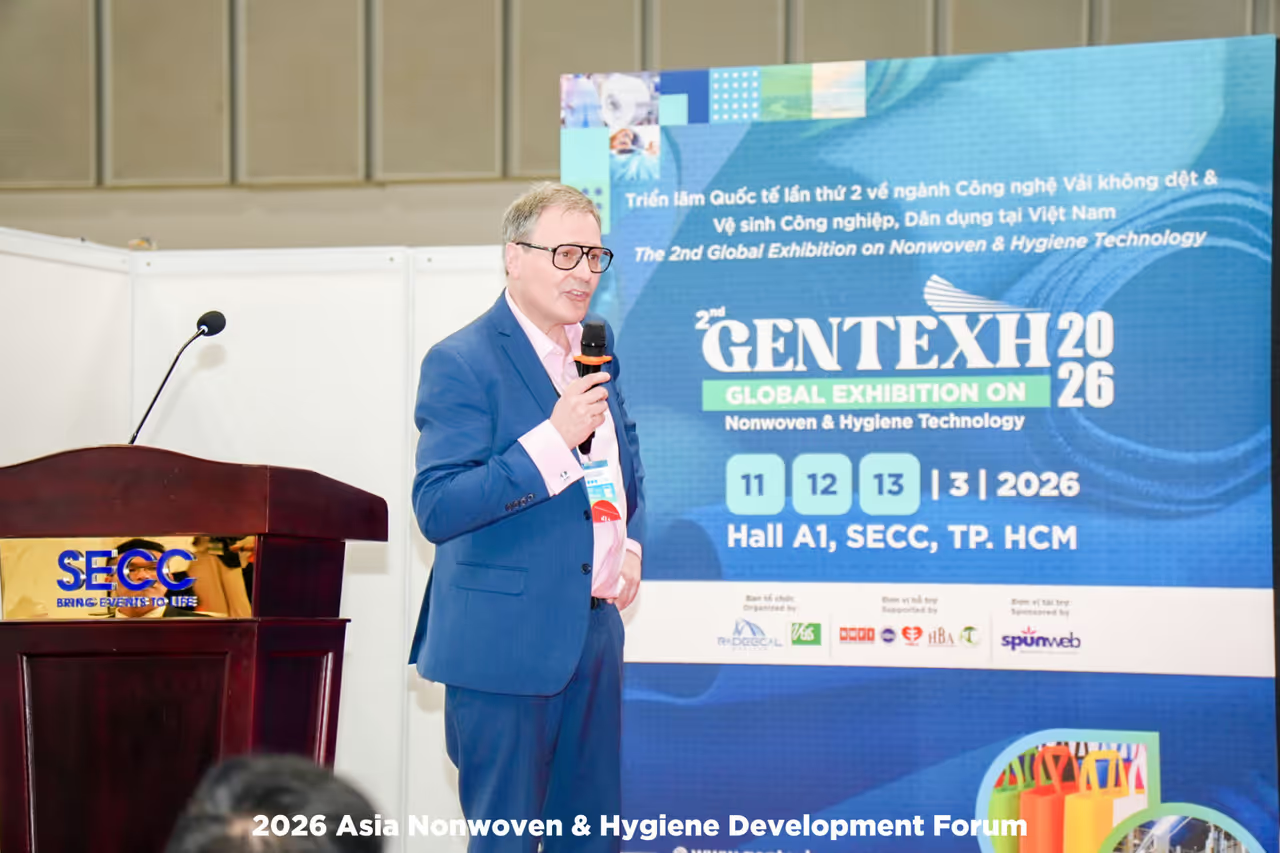
On 11 March 2026, David E. James of David E. James Consultancy Ltd presented at the Asia Nonwoven and Hygiene Development Forum in Ho Chi Minh City, Vietnam, delivering a detailed overview of the evolving international standards and regulatory landscape affecting wet wipes and wastewater systems.
The presentation, titled "Wet Wipes and Wastewater Systems: ISO Standards and the UK–European Regulatory Direction", examined developments within the International Organisation for Standardisation (ISO), emerging regulatory pressures in Europe and the United Kingdom, and the implications for manufacturers and exporters in the global nonwovens and hygiene products sector.
Download the full presentation slides (PowerPoint)
A Long-Running Debate in the Wipes Industry
The issue of whether wet wipes should be considered "flushable" has been debated for more than two decades. Early research into flushable consumer products began in the early 2000s, eventually leading to the development of industry guidance documents such as GD1, GD2 and GD3, published by INDA and EDANA between 2008 and 2013.
However, disagreements between wastewater operators and wipes manufacturers have persisted, particularly regarding testing methodologies and definitions of flushability. The core concern is that improperly flushed wipes can contribute to sewer blockages, pump failures, and environmental pollution.
This debate intensified following high-profile studies and audits in the UK, including the 2017 "Wipes in Sewer Audit", which reported that wet wipes accounted for a large proportion of materials causing sewer blockages.
ISO's Role in Addressing the Problem
One of the central themes of the presentation was the work of ISO Technical Committee 224 (ISO/TC 224), which focuses on standards relating to water services and wastewater systems.
Initial efforts between 2014 and 2017 attempted to develop a Technical Specification that would establish criteria for flushable products. However, this work faced significant technical and political challenges within ISO, including disputes over the scope of the committee and whether it had authority to define performance thresholds for products.
As a result, the first outcome of the work was ISO/TR 24524:2019, a Technical Report describing the hydraulic, mechanical and environmental conditions found in wastewater transport systems rather than defining flushability criteria.
This report outlined how materials move through the wastewater system — from the toilet through drain lines, sewers, pumps and treatment plants — and identifies conditions that can lead to clogging or infrastructure damage.
The Current ISO Project: ISO/DTS 18671
ISO working group TC 224/WG10 is currently developing ISO/DTS 18671, a Draft Technical Specification that aims to:
- Identify test methodologies for assessing the compatibility of wet wipes and moist toilet tissue with wastewater systems
- Provide guidance on labelling to inform consumers whether products should or should not be flushed
- Reduce sewer blockages, infrastructure damage and environmental impacts caused by inappropriate disposal.
Importantly, the proposed specification does not create a single global testing standard. Instead, it references several existing methodologies used internationally, including:
- EDANA/INDA GD4
- UK Water Industry Specification (WIS)
- UNE 149002 (Spain)
- GB/T 40181 (China)
- AS/NZS 5328 (Australia/New Zealand).
Testing approaches typically evaluate factors such as drain line clearance, pump compatibility, disintegration behaviour, settling characteristics and biodegradation.
Labelling and the "Do Not Flush" Symbol
Another key topic discussed was the proposed ISO "Do Not Flush" (DNF) symbol, which may appear in the Technical Specification as guidance for labelling non-flushable products.
The draft symbol depicts a toilet with a crossed-out wipe and would be accompanied by clear advisory wording such as "Do Not Flush." The aim is to improve consumer communication and reduce confusion about appropriate disposal methods.
However, the specification does not propose a unified global "flushable" label, leaving the use of positive flushability claims to regional regulations or industry schemes.
Policy Direction in the UK and Europe
The regulatory debate is also evolving, particularly in the United Kingdom and European Union.
Across the UK water sector there is now a strong consensus that only the "three Ps" — pee, poo and paper — should be flushed down toilets. Wet wipes, even those marketed as plastic-free, are widely considered by wastewater operators to contribute to blockages and sewer overflows.
Recent policy developments include:
- Legislation to ban the sale of wet wipes containing plastic fibres across the UK between 2026 and 2027
- Continued promotion of the "Bin the Wipe" campaign by water companies
- Consideration of mandatory "Do Not Flush" labelling in the future.
The Independent Water Commission (2025) also highlighted wet wipes as a major contributor to sewer blockages and called for stronger "pre-pipe" solutions — measures aimed at preventing materials from entering wastewater systems in the first place.
Implications for the Global Hygiene Sector
For manufacturers, brand owners and suppliers attending the forum, the key message was that the regulatory and standards landscape is continuing to evolve.
Several important trends are emerging:
- Increasing regulation of wet wipes in Europe and other markets
- Growing emphasis on consumer behaviour change and disposal messaging
- Continued fragmentation of testing methodologies globally
- Expansion of national standards and labelling requirements.
Participation in international standards development was highlighted as an important strategy for industry stakeholders. Currently, only a small number of ISO delegations include representatives from the nonwovens sector, meaning that decisions affecting the industry could increasingly be shaped by wastewater utilities and regulators.
The Need for Collaboration
A central conclusion of the presentation was that resolving the wet wipes debate requires closer cooperation between industry and the wastewater sector.
Rather than continuing an adversarial approach, a multi-stakeholder collaboration involving manufacturers, utilities, regulators and environmental organisations may be needed to develop practical solutions.
Ultimately, while hygiene products provide important societal benefits, ensuring their responsible disposal and compatibility with wastewater infrastructure remains a shared responsibility across the entire value chain.