
World of Wipes® 2026: Innovation, Sustainability and Regulation — Reflections from Nashville
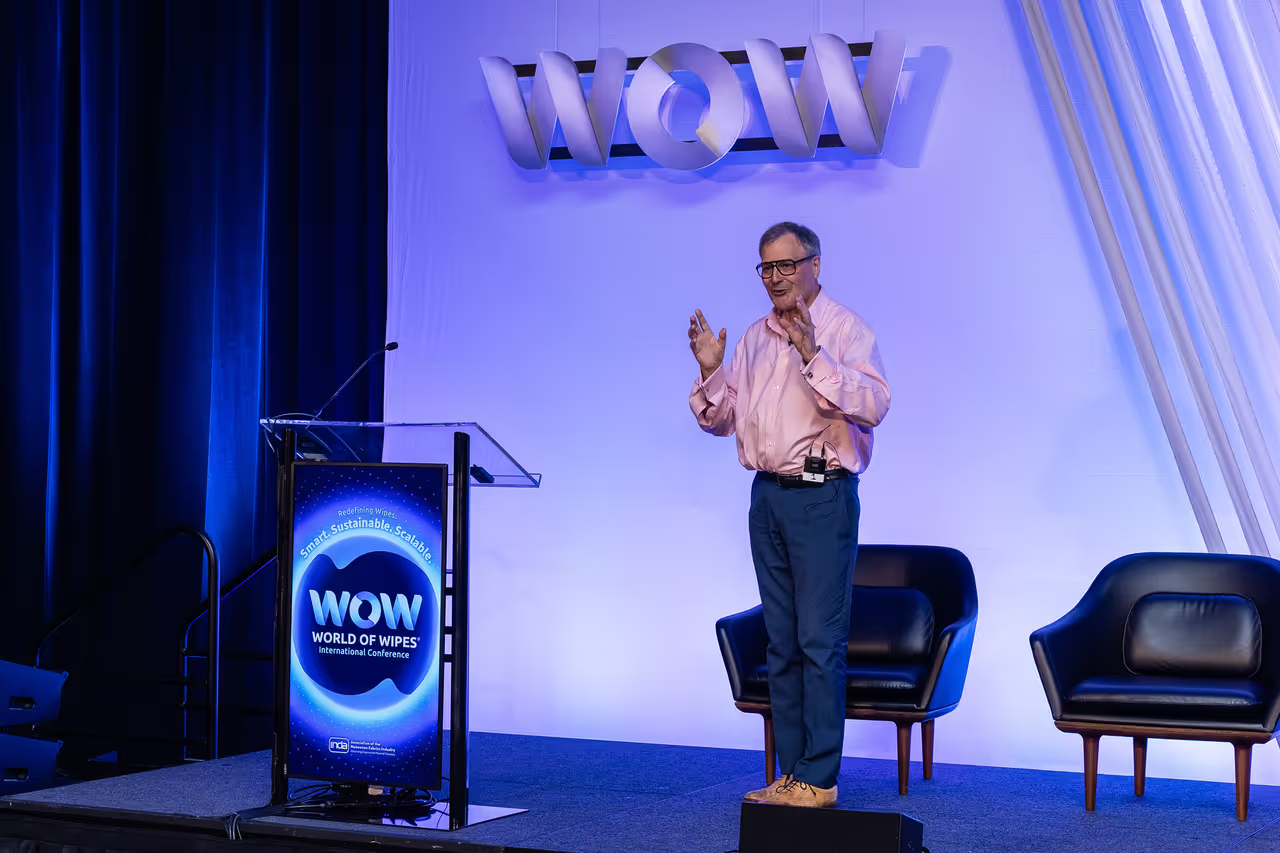
David E. James FTI CText APkgPrf MIMMM, Principal Consultant – David E. James Consultancy Ltd — World of Wipes® International Conference 2026, Nashville, Tennessee, USA.
Introduction
For four days at the end of June and beginning of July 2026, the global wipes industry gathered in Nashville, Tennessee, for INDA's World of Wipes® (WOW) International Conference. Recognised as the premier technical conference dedicated exclusively to wipes, WOW once again brought together manufacturers, raw material suppliers, machinery companies, chemical suppliers, packaging specialists, brand owners, consultants, academics, and regulators to discuss the technologies and market forces shaping the industry's future. The programme combined technical presentations, market analysis, innovation awards, networking events, and regulatory discussions, creating an environment in which commercial strategy and scientific innovation sat comfortably alongside policy and sustainability.
I was delighted to attend the conference, renew many longstanding industry friendships developed over more than three decades in the wipes and nonwovens sector, establish a number of valuable new contacts and, most importantly, present my own paper entitled Beyond Plastic: The UK Plastics in Wet Wipes Ban and Its Implications for Products, Labelling, Flushability and Europe – The End of the Beginning or the Beginning of the End? on the final day of the conference.
Read more about the Beyond Plastic presentation — or download the full presentation slides (PowerPoint).
Having attended numerous international conferences over the years, one aspect of WOW 2026 stood out immediately. Rather than concentrating on a single dominant topic, the conference reflected an industry undergoing transformation on multiple fronts simultaneously. Sustainability remains a powerful driver, but it now sits alongside advances in materials science, manufacturing technology, consumer expectations, product efficacy, packaging innovation, and an increasingly complex regulatory landscape.
Perhaps the most striking observation was that these topics are no longer developing independently. Throughout the conference, speakers repeatedly demonstrated how innovation in one area inevitably influences another. New substrate technologies must satisfy sustainability goals without compromising performance. Packaging engineers are responding to Extended Producer Responsibility (EPR) requirements while maintaining consumer convenience. Product developers are increasingly considering future regulatory requirements at the earliest stages of innovation rather than after products have reached the market.
In many respects, World of Wipes 2026 reflected an industry becoming more integrated, more scientific, and more strategically aligned than ever before.
Conference Overview
This year's programme was exceptionally broad in scope. Over three days of technical presentations, delegates heard from industry leaders representing manufacturers, research organisations, universities, and multinational consumer brands. Topics ranged from global market trends and high-speed converting technologies through to fibre engineering, preservative systems, antimicrobial wipes, skin science, packaging innovation, consumer behaviour, and international regulation.
Equally impressive was the diversity of delegates attending the conference. The participant list included representatives from virtually every segment of the wipes supply chain, including global consumer brands such as Kimberly-Clark, Procter & Gamble, Clorox, Reckitt, Nice-Pak and Rockline Industries; major nonwoven producers including Lenzing, Suominen, Fibertex, Freudenberg, Fitesa, Birla Cellulose and Magnera; machinery manufacturers such as Andritz, IMA Teknoweb, A.Celli, BW Packaging, Elsner and Bretting; together with chemical suppliers, packaging companies, testing organisations and specialist consultants from across the world. Delegates travelled from the United States, Canada, the United Kingdom, Italy, Austria, Finland, Belgium, Germany, Denmark, India, China, Turkey, Saudi Arabia, Israel, Mexico, Australia, Vietnam and several other countries, underlining the truly global nature of today's wipes industry.
Another notable feature was the seniority of those attending. The participant list included chief executives, presidents, vice-presidents, chief technology officers, research directors, global marketing leaders, and senior scientists, demonstrating that the strategic importance of the wipes sector continues to increase within many organisations.
One further observation deserves mention. Unlike many technical conferences where sustainability dominates almost every discussion, WOW 2026 achieved a balanced programme. Sustainability was clearly important, but it was consistently considered alongside product performance, manufacturing efficiency, regulatory compliance, and commercial viability. This reflects the industry's growing maturity: environmental improvements are increasingly being viewed as one component of product excellence rather than the sole measure of innovation.
As I reflected on the presentations, five major themes emerged. While individual speakers approached these subjects from different perspectives, together they painted a remarkably coherent picture of where the global wipes industry is heading.

Five Major Themes
1. The industry remains resilient but is evolving rapidly
The opening sessions established an optimistic yet realistic tone. Presentations from Euromonitor International, INDA and the opening industry panel explored market growth, changing consumer behaviour and the commercial challenges created by geopolitical uncertainty, supply chain volatility, and inflationary pressures.
Despite these uncertainties, there was little suggestion that demand for wipes is weakening. Instead, the market is evolving towards more specialised, premium, and application-specific products. Consumers increasingly expect wipes that offer enhanced skincare benefits, superior cleaning performance, sustainability credentials, and convenience. Manufacturers therefore face a more sophisticated marketplace where innovation—not simply price—is becoming the principal competitive differentiator.
2. Plastic-free has become the starting point—not the destination
Perhaps the strongest technical theme running throughout the conference concerned the rapid evolution of cellulose-based and plastic-free substrates.
Presentations from Birla Cellulose, Lenzing and other fibre manufacturers demonstrated how regenerated cellulose fibres, advanced fibre blends and engineered nonwoven structures continue to improve strength, absorbency and dispersibility while reducing reliance on synthetic polymers.
Several years ago, the principal question was whether plastic-free wipes could match the performance of conventional products. At WOW 2026 that debate appeared largely settled. The conversation has moved on. Today's challenge is not replacing plastics, but optimising product performance while simultaneously improving sustainability, flushability, processing efficiency and cost competitiveness.
3. Sustainability now encompasses the entire product lifecycle
Another recurring theme was the industry's broader understanding of sustainability.
Numerous presentations demonstrated that sustainability now extends far beyond substrate selection. Speakers discussed high-speed converting, manufacturing efficiency, packaging optimisation, degradable formulation chemistry, and future Extended Producer Responsibility requirements.
The industry's focus is clearly shifting from "What is the wipe made from?" to "How can every stage of the product lifecycle be improved?" This systems-based approach recognises that genuine sustainability must consider raw materials, manufacturing, packaging, logistics, consumer use, and end-of-life impacts together rather than in isolation.
4. Science continues to underpin product performance
A substantial proportion of the programme focused on formulation science, disinfectant efficacy, preservative systems, skin compatibility, and product validation.
Presentations from Reckitt, Clorox, Clariant, the University of Toledo and others highlighted the increasing importance of robust scientific evidence to support product claims. Topics ranged from disinfecting wipes and preservative robustness to benzalkonium chloride skin penetration and novel sustainable formulations.
This emphasis reflects the continuing professionalisation of the wipes industry. Future product success will increasingly depend not simply upon marketing claims but upon demonstrable scientific performance supported by appropriate testing and evidence.
5. Regulation is becoming one of the industry's primary innovation drivers
The final—and perhaps most significant—theme concerned regulation.
The final morning of the conference was devoted almost entirely to legislation, standards, flushability and future regulatory developments. Discussions covered antimicrobial product regulation, tariffs, PFAS restrictions, plastics legislation, international standards, consumer behaviour and "Do Not Flush" labelling before concluding with a panel discussion involving INDA and the Responsible Flushing Alliance. My own presentation considered the implications of the United Kingdom's forthcoming plastic wet wipes legislation together with wider European developments and evolving international flushability standards.
The overall message was unmistakable. Regulation is no longer simply a compliance exercise undertaken after products have been developed. Increasingly, regulatory developments are shaping research priorities, influencing product design, and driving investment decisions throughout the industry. Companies that anticipate regulatory change are likely to gain a competitive advantage over those that merely respond once legislation has been enacted.
Looking ahead
Taken together, these five themes reveal an industry in transition. The conversations in Nashville suggested that the next generation of wipes will be defined not by a single breakthrough technology but by the successful integration of advanced materials, sound science, sustainable design, and forward-looking regulatory compliance.
The following sections of this conference review examine the individual presentations in more detail, highlighting the key technical messages, innovations and commercial insights that emerged from each session and considering what they may mean for manufacturers, suppliers and brand owners operating in the global wipes market.
1. The Commercial Forces Driving Innovation in the Global Wipes Industry
The opening morning of World of Wipes® 2026 did much more than provide delegates with an update on current market conditions. Collectively, the first three sessions established the commercial framework for almost every technical presentation that followed during the conference. Rather than asking "What new technologies are available?" they addressed the more fundamental question:
What commercial forces will determine where innovation investment is directed over the next five to ten years?
The answer was remarkably consistent throughout the morning. The wipes industry remains fundamentally healthy, demand continues to grow globally and innovation remains strong. However, the drivers of that innovation are changing. Companies are no longer innovating simply to improve product performance or reduce manufacturing costs. Increasingly, innovation is being shaped by changing consumer expectations, regional market differences, geopolitical uncertainty, sustainability requirements, and an increasingly complex regulatory environment.
Perhaps the most striking observation was that the industry is becoming more sophisticated rather than simply larger. Growth is no longer measured purely by sales volume. Instead, manufacturers are seeking to create additional value through premium products, enhanced consumer experiences, improved skin health, sustainable materials, and evidence-based performance claims.
A healthy market with long-term growth prospects
Matt O'Sickey's presentation, Global Wipes Market Insights, provided a reassuring assessment of the industry's overall health. Drawing upon INDA's market intelligence and the joint INDA/EDANA global nonwovens reports, he demonstrated that the nonwovens sector continues to outperform broader economic growth. One of the most telling comparisons was between industry growth and wider economic indicators. North American nonwoven capacity continues to expand at rates comfortably exceeding both GDP growth and population growth, illustrating that demand is being driven by increasing product adoption and expanding applications rather than demographic change alone.
This growth is not confined to North America. Global wipes nonwoven production has more than doubled over the last decade, increasing from approximately 1.13 million tonnes in 2013 to more than 2.33 million tonnes by 2023, with production forecast to reach around 2.72 million tonnes by 2028. Asia continues to be the fastest-growing production region, while North America is experiencing renewed investment and capacity expansion. Europe remains an important manufacturing base, although future growth is expected to be comparatively modest.
One particularly interesting observation concerned global manufacturing geography. Asian production continues to increase, with India emerging as an increasingly important supplier to international markets. At the same time, North American production is recovering through significant investment in new spunlaid capacity and other manufacturing technologies. These developments illustrate how the global supply chain continues to evolve in response to changing trade patterns, transport economics, and geopolitical developments.
Growth is increasingly being driven by value rather than volume
While INDA focused primarily on industrial production and supply, Euromonitor International examined demand from the consumer's perspective. Their analysis suggested that the global wipes market has entered a more mature phase. Growth continues, but the nature of that growth is changing.
One of the most important findings was that value growth is now consistently exceeding volume growth. The presentation illustrated a widening gap between retail sales value and retail unit growth, indicating that consumers are increasingly willing to pay for products that deliver additional benefits rather than simply purchasing larger quantities. The global personal wipes market reached approximately 341 billion units in 2025, with around 67% of projected volume growth to 2030 expected to come from developing economies, while baby wipes continue to account for approximately 64% of total category volume.
This distinction between value growth and volume growth has important implications for manufacturers. Future commercial success is likely to depend less upon increasing production volumes and more upon creating products that consumers perceive as offering superior performance, enhanced skincare benefits, greater convenience, or improved sustainability.
Consumers are redefining what constitutes value
Perhaps the most thought-provoking aspect of the Euromonitor presentation concerned changing consumer expectations. Rather than viewing wipes simply as convenient disposable products, consumers are increasingly incorporating them into broader health, wellness, and personal care routines.
Euromonitor identified three strategic pillars for future value creation:
- Proactive skin care
- Experiential elevate
- Occasion targeting
These themes represent a significant shift in market thinking. Products are moving from reactive cleaning towards proactive skin health, from purely functional performance towards positive user experiences and from single-purpose applications towards products designed for multiple usage occasions.
The presentation also highlighted wider consumer trends that are influencing purchasing behaviour. Although over 70% of consumers remain concerned about rising everyday living costs, more than one-third nevertheless expect to increase spending on health and wellness, while approximately half are seeking products tailored more closely to their individual needs. This apparent contradiction suggests that consumers remain willing to spend more where they perceive clear additional value.
An equally important message was that claims alone are no longer sufficient. Euromonitor argued that "proof creates value", with scientific evidence, demonstrable efficacy and clinically supported performance becoming increasingly important purchasing criteria. Consumers still value claims such as "hypoallergenic", "fragrance-free" and "natural", but these are rapidly becoming expected baseline characteristics rather than premium differentiators. Future product differentiation is therefore likely to depend upon scientifically validated benefits rather than marketing language alone.
Innovation in an era of uncertainty
These market trends formed the backdrop to the conference's opening panel discussion, Innovation in the Era of Volatility, which brought together senior executives from Lenzing AG, Diamond Wipes, Americhem Inc., Magnera and Procter & Gamble under the moderation of Matt O'Sickey.
Although each panellist approached the discussion from a different part of the supply chain, a common theme quickly emerged. Volatility is no longer viewed as a temporary disruption but as a permanent feature of the global business environment. Geopolitical uncertainty, fluctuating raw material costs, changing tariffs, evolving regulations, and shifting consumer expectations are now regarded as normal operating conditions rather than exceptional events.
Importantly, the discussion was notably optimistic. Rather than portraying volatility as a threat, the panel consistently argued that periods of uncertainty often stimulate innovation. Companies able to respond rapidly through new materials, improved manufacturing technologies, supply chain resilience, and closer collaboration with customers are likely to strengthen their competitive position.
This message resonated strongly with the remainder of the conference. Whether discussing cellulose fibres, sustainable chemistry, advanced converting technologies, or future regulation, almost every subsequent presentation could be viewed as a practical response to the strategic challenges identified during the opening morning.
A more regionalised global market
Another consistent message was that the wipes industry is becoming increasingly regional in character. Euromonitor demonstrated that product portfolios vary significantly between countries, reflecting differences in demographics, consumer preferences, retail structures, and regulation. Baby wipes remain dominant in many markets, while moist toilet tissue continues to show robust growth potential despite regulatory scrutiny. Manufacturers operating globally therefore face the challenge of balancing global brand consistency with local market adaptation.
INDA's analysis reached similar conclusions from the manufacturing perspective. Trade flows are evolving as tariffs influence sourcing decisions and production shifts between regions. India's growing role as a supplier to North America was highlighted as a notable example of how global supply chains continue to adjust to changing geopolitical and economic conditions.
Overall observations
Taken together, these three opening sessions established the strategic context for World of Wipes® 2026. They demonstrated that the wipes industry is entering a new phase of development in which commercial success will depend less upon producing greater volumes and more upon delivering greater value. Innovation is increasingly being directed towards products that combine superior performance with scientifically validated benefits, enhanced consumer experiences, and stronger sustainability credentials.
Perhaps the most important conclusion from the opening morning was that innovation is no longer being driven by technology alone. Instead, it is being shaped by the interaction between changing consumer expectations, global market dynamics, regional regulatory pressures, and an increasingly uncertain commercial environment. Understanding these forces provides the context for the technical innovations discussed throughout the remainder of the conference—and explains why the future of the wipes industry is likely to be defined as much by strategy and adaptability as by advances in materials science or manufacturing technology.
2. Plastic-Free Has Become Mainstream
One of the clearest themes to emerge from World of Wipes® 2026 was that the debate over plastic-free wipes has fundamentally changed. Only a few years ago, much of the industry's effort focused on proving that plastic-free substrates were technically feasible. At this year's conference, that question was rarely discussed. Instead, presentations from Lenzing, Birla Cellulose and Soane Materials demonstrated that the conversation has moved decisively to a more advanced stage.
The industry is no longer asking:
"Can we make plastic-free wipes?"
Instead, manufacturers are asking:
"How can plastic-free products match—or even exceed—the performance of traditional synthetic substrates?"
That subtle change represents a major shift in industry thinking.
From material substitution to material engineering
Across all three presentations there was remarkable consistency of message. Simply replacing polyester or polypropylene with regenerated cellulose is no longer considered sufficient. High-performance plastic-free wipes require careful engineering of fibre selection, fibre blends, web formation, hydroentanglement, sheet architecture and converting processes.
In other words, the challenge is no longer material substitution; it is nonwoven engineering.
Birla Cellulose described this transition particularly well. Their presentation argued that engineering plastic-free wipes requires a holistic redesign of the product rather than simply changing the fibre. They identified three interconnected considerations:
- raw material availability and security of supply
- technology and material compatibility
- meeting demanding performance requirements such as strength, softness, absorbency, and consumer expectations
Importantly, Birla also challenged the widespread assumption that existing production technologies cannot accommodate fully cellulosic substrates. Their conclusion was encouraging:
- current nonwoven technologies already process cellulosic fibres
- 100% cellulosic constructions are technically achievable
- some performance gaps remain for specific applications
- these gaps are considered solvable through collaborative development across the value chain
That is a significant statement. It suggests that the remaining barriers are engineering challenges rather than fundamental scientific limitations.
Regenerated cellulose comes of age
Lenzing's presentation illustrated how regenerated cellulose technology has evolved beyond simply offering an environmentally preferable fibre. Instead, the emphasis has shifted towards designing sophisticated nonwoven structures capable of delivering differentiated functionality.
Their work on dual-sided cellulosic wipes demonstrated that entirely plastic-free materials can combine an abrasive cleaning surface with a softer absorbent layer, providing two distinct cleaning functions within a single 100% cellulosic substrate. The presentation highlighted engineered pore structures, fibre entanglement, and differing surface architectures to achieve both scrubbing performance and absorbency without synthetic fibres.
Lenzing's broader technology platform also illustrated how regenerated cellulose is now being engineered for multiple applications, including household cleaning, industrial wipes, absorbent hygiene products, filters, and reusable cleaning materials. Significantly, these developments were presented explicitly as enabling manufacturers to respond to emerging regulatory initiatives such as the UK wet wipes ban and the European Single-Use Plastics Directive.
Flushability is becoming part of the design process
Perhaps the most interesting development was the increasing convergence between plastic-free design and flushability.
For many years these have often been treated as separate technical disciplines. This conference suggested they are becoming increasingly interconnected.
The presentation from Soane Materials focused on one of the industry's most difficult technical problems: producing substrates that possess sufficient wet strength during use while rapidly disintegrating after flushing. Their message was that future product development must balance three competing design objectives simultaneously:
- wet strength
- rapid disintegration
- commercial viability
Rather than viewing flushability as an afterthought, the presentation treated dispersibility as an integral design parameter alongside substrate strength and manufacturing cost.
This is an important evolution in thinking. As regulatory scrutiny of sewer compatibility increases in Europe and elsewhere, substrate engineering is likely to focus increasingly on optimising fibre blends, network architecture, and controlled fibre release to achieve both consumer performance and infrastructure compatibility.
Fibre blends and advanced nonwoven engineering
Another recurring message concerned the importance of fibre blends.
Earlier generations of wipes often relied upon relatively straightforward combinations of viscose and polyester. Today's products are becoming considerably more sophisticated, combining different regenerated cellulose fibres, lyocell, viscose, microfibrillated cellulose and engineered fibre architectures to optimise individual performance characteristics.
Rather than searching for a single "perfect" fibre, manufacturers are increasingly engineering composite structures in which different fibres contribute complementary properties including:
- tensile strength
- absorbency
- lotion compatibility
- surface texture
- softness
- controlled dispersibility
- processability during manufacture
The nonwoven itself has become the engineered product.
Looking ahead
Collectively, these presentations suggested that plastic-free wipes have entered a new phase of technological maturity. The fundamental feasibility questions have largely been answered. Future competitive advantage will depend less upon whether a product contains plastic and more upon how effectively advanced fibre engineering delivers superior consumer performance while satisfying increasingly demanding environmental and regulatory expectations.
For product developers, this represents an important change in priorities. Success is no longer likely to be achieved through simple material substitution. Instead, innovation will increasingly centre on sophisticated nonwoven engineering, advanced regenerated cellulose technologies, carefully optimised fibre blends, and substrates that combine excellent in-use performance with credible end-of-life behaviour.
Key takeaway
Plastic-free has become mainstream. The competitive advantage is no longer achieved by removing plastic—it will be achieved by engineering cellulosic nonwovens that equal or outperform traditional synthetic substrates while meeting increasingly demanding sustainability and flushability requirements.

3. Sustainability Now Encompasses the Entire Product Lifecycle
Another recurring theme throughout World of Wipes® 2026 was the industry's much broader understanding of sustainability.
Only a few years ago, sustainability discussions tended to focus almost exclusively on replacing synthetic fibres with renewable alternatives. While substrate innovation remains important, this year's conference demonstrated that manufacturers are increasingly adopting a whole-system perspective.
The question is no longer simply:
"What is the wipe made from?"
Instead, the industry is asking:
"How can every stage of the product lifecycle be improved?"
That represents a fundamental change in thinking.
Manufacturing is becoming part of the sustainability equation
Perhaps surprisingly, one of the strongest sustainability messages came not from a fibre supplier but from a machinery manufacturer.
Guido Conio (IMA Tissue & Nonwoven) argued that the transition towards natural fibre and flushable substrates also requires changes in manufacturing technology. Legacy converting equipment, designed around traditional synthetic-based materials, often experiences lower speeds, increased scrap rates and reduced efficiency when processing natural-fibre substrates. Consequently, sustainability improvements can unintentionally increase manufacturing costs unless production technology evolves alongside material innovation.
His presentation demonstrated that sustainability is no longer simply about selecting renewable materials. It also depends upon improving:
- converting efficiency
- material utilisation
- manufacturing speed
- scrap reduction
- overall production economics
In other words, sustainable products also need sustainable manufacturing processes.
Packaging has become a strategic sustainability issue
Packaging emerged as another major focus of the conference.
Jessie Schwartz's presentation highlighted how Extended Producer Responsibility (EPR) schemes are transforming packaging from a relatively straightforward engineering decision into a regulated cost centre. Future packaging decisions will increasingly influence regulatory compliance, reporting obligations and producer fees as well as product performance.
Importantly, the presentation emphasised that wipe packaging is rarely a single material. Films, labels, adhesives, flip-top lids, rigid components, transport packaging, and secondary packaging may all attract different regulatory treatment under emerging EPR systems. Manufacturers therefore need detailed knowledge of every packaging component rather than considering the pack as a single entity.
Similarly, Paul Jenkins (ThePackHub) described wipe packaging as being "at a crossroads", where sustainability, regulatory requirements and product performance must all be balanced simultaneously. Among the dominant trends he identified were refill and reuse systems, bio-based materials, material reduction, recycled content and increasing paperisation across consumer products.
Together, these presentations suggested that packaging innovation is becoming as strategically important as substrate innovation.
Sustainable ingredients extend beyond fibres
The sustainability discussion also extended beyond the wipe substrate itself.
Trey Riddle (IND Hemp) demonstrated how sustainability can be considered throughout the complete product formulation. His concept combined hemp fibre with refined hemp seed oil to produce an all-natural exfoliating wipe that simultaneously delivered mechanical exfoliation and anti-inflammatory skin conditioning.
Rather than introducing sustainability simply through renewable fibres, the presentation considered sustainable sourcing of ingredients, multifunctional product design, reduced reliance on synthetic exfoliating materials and integration of natural formulation chemistry into overall product performance.
This illustrates how sustainability is increasingly influencing the entire formulation strategy rather than only the substrate.
A systems approach to sustainability
Taken together, these presentations demonstrated that sustainability has become a systems engineering challenge.
Manufacturers are increasingly evaluating every stage of the product lifecycle, including:
- renewable raw materials
- manufacturing efficiency
- converting technology
- packaging optimisation
- formulation chemistry
- logistics and transport
- regulatory compliance
- Extended Producer Responsibility
- end-of-life management
Rather than optimising individual components, companies are beginning to optimise the complete system.
This broader perspective recognises that genuine sustainability cannot be achieved through material substitution alone. Improvements in one stage of the product lifecycle should not create unintended environmental or economic burdens elsewhere.
Looking ahead
The conference suggested that sustainability is evolving from a collection of individual initiatives into an integrated design philosophy.
Future product development is likely to require multidisciplinary teams combining expertise in materials science, nonwoven engineering, formulation chemistry, manufacturing technology, packaging design, and regulatory affairs.
Those organisations able to optimise the entire product lifecycle—not simply the substrate—are likely to be best placed to meet future environmental expectations while remaining commercially competitive.
Key takeaway
Sustainability is no longer a material choice—it has become a product system. The future belongs to manufacturers who optimise the entire lifecycle, from fibre selection and formulation through manufacturing, packaging, consumer use, and end-of-life performance.
4. Science Continues to Underpin Product Performance
One of the most striking features of World of Wipes® 2026 was the significant role of science throughout the technical programme.
Rather than focusing primarily on product marketing or consumer trends, many presentations explored the underlying scientific principles that determine whether a wipe performs effectively, remains microbiologically stable throughout its shelf life, and can substantiate increasingly demanding product claims.
The conference reinforced an important message: innovation without scientific validation is unlikely to succeed.
Formulation science is becoming increasingly sophisticated
Several presentations demonstrated that modern wet wipes are no longer viewed as simple combinations of substrate and lotion. Instead, they are increasingly regarded as integrated systems in which fibres, formulation chemistry and preservation interact to determine overall product performance.
Dr Pascal Yvon and Dr Paul Salama (Eternis Personal Care) described wet wipes as an interdependent ecosystem comprising three equally important pillars: the nonwoven fabric, the lotion, and the preservative system. Rather than optimising these independently, future product development increasingly requires consideration of how each component influences the others.
Their work also highlighted the new challenges created by the industry's transition towards natural and biodegradable substrates. While these materials offer significant sustainability advantages, they present additional formulation, preservation, and manufacturing challenges, including greater microbial susceptibility, biofilm formation, variable liquid uptake and more complex interactions between substrates and preservatives.
Product safety remains fundamental
Microbiological safety emerged as another recurring scientific theme.
Aysel Calkap (Clariant) demonstrated why wet wipes represent inherently high-risk products from a preservation perspective. High water activity, prolonged storage, repeated consumer handling, and increasingly complex formulations all create favourable conditions for microbial contamination, making preservative performance fundamental to product safety.
Her presentation illustrated that formulation complexity can inadvertently reduce preservative effectiveness. Botanical extracts, polymers, oils, and multifunctional ingredients may bind preservatives, alter pH, or create protected micro-environments in which microorganisms can survive. Consequently, successful preservation increasingly depends upon understanding interactions within the complete formulation rather than simply selecting an antimicrobial ingredient.
The overall message was clear: preservation is no longer an isolated formulation decision but an integral part of product design.
Scientific evidence supports product claims
The conference also demonstrated increasing emphasis on generating robust scientific evidence to support product claims.
Gabriella Baki (University of Toledo) presented research investigating the penetration of benzalkonium chloride (BZK) through human skin using ex vivo skin models. The work examined different formulation systems, repeated exposure, and analytical techniques to understand both efficacy and skin exposure, illustrating the increasingly sophisticated scientific approaches being applied to ingredient safety assessment.
Similarly, presentations addressing disinfecting technologies, preservative robustness and microbiological efficacy consistently relied upon laboratory testing, analytical chemistry, and structured validation rather than marketing-led assertions.
The industry increasingly expects products to be supported by measurable scientific evidence.
Innovation is increasingly evidence-based
Even presentations focused on consumer innovation reflected this scientific approach.
John Gelinas (Clorox) introduced Refreshables, a novel dryer-based wipe designed to refresh lightly worn clothing between washes. Rather than presenting the concept simply as a marketing innovation, the development was grounded in consumer behavioural research identifying an unmet need between wearing and laundering garments, demonstrating how consumer insight and scientific product development are increasingly combined.
This reflects a broader trend across the industry in which successful innovation increasingly depends upon integrating consumer understanding with rigorous technical validation.
A more mature industry
Taken together, these presentations suggest that the wipes industry continues to mature scientifically.
Future commercial success is likely to depend not only upon developing innovative products, but also upon generating the robust scientific evidence necessary to demonstrate that those products are safe, effective, and capable of meeting increasingly demanding regulatory and consumer expectations.
As sustainability requirements, microbiological risks and regulatory scrutiny continue to increase, scientific validation is becoming a commercial necessity rather than simply a research exercise.
Key takeaway
World of Wipes® 2026 demonstrated that science has become the industry's competitive currency. Future product success will depend not simply upon making claims, but upon generating the robust scientific evidence needed to prove them.
5. Regulation Has Become One of the Industry's Primary Innovation Drivers
The final morning of World of Wipes® 2026 was devoted almost entirely to regulation, standards, legislation, and public policy. While technical innovation dominated much of the earlier conference programme, the closing sessions made it abundantly clear that future innovation will increasingly be driven by regulatory developments rather than by technology alone.
Presentations covered antimicrobial product regulation, international trade tariffs, Extended Producer Responsibility (EPR), PFAS restrictions, plastics legislation, international standards, consumer behaviour, "Do Not Flush" (DNF) labelling and the future development of flushability standards. Together, these sessions painted a picture of an industry operating within an increasingly complex and rapidly evolving regulatory landscape.
The overarching message was unmistakable: regulation is no longer something that happens after products have been developed. Increasingly, regulation is shaping the products that companies choose to develop in the first place.
Regulation now influences every stage of product development
Camile Dematos Gomes (Clorox) demonstrated just how closely product development has become intertwined with regulatory approval.
Using antimicrobial wipes as an example, she described a development pathway that extends from initial product concept through formulation, performance testing, regulatory submission, government review, and ultimately post-market obligations. Rather than representing the final stage of development, regulatory considerations now influence formulation choices, ingredient selection, efficacy testing, and commercial planning from the very beginning of the innovation process.
The presentation illustrated an increasingly important reality: successful product developers must understand regulatory science as thoroughly as formulation chemistry.
A patchwork of regulation is becoming a commercial challenge
One of the most informative presentations came from Wes Fisher (INDA), who described what he termed the industry's "regulatory storm."
His analysis demonstrated that regulatory pressure is now emerging simultaneously across multiple fronts. Tariffs continue to influence raw material sourcing; Extended Producer Responsibility schemes are reshaping packaging economics; PFAS restrictions continue to expand at state level, while sustainability legislation increasingly influences both product design and chemical selection. At the same time, mandatory "Do Not Flush" labelling represents one area where national harmonisation may finally replace the growing patchwork of state legislation.
Perhaps the most significant observation was that many regulatory initiatives are no longer being driven by federal governments alone. In the United States, increasing legislative activity at individual state level means manufacturers must often navigate multiple overlapping regulatory regimes simultaneously.
For multinational manufacturers, this growing regulatory complexity is becoming as significant a commercial consideration as technological innovation itself.
International standards continue to evolve
Matt O'Sickey (INDA) provided an update on the development of international wipes standards, including progress towards the first ISO Technical Specification for assessing the compatibility of wet wipes and moist toilet tissue with wastewater collection and treatment systems. His presentation explained the role of ISO in developing globally recognised technical standards and outlined the continuing evolution of international flushability testing methodologies.
International standards do not automatically become law. However, they increasingly provide the technical foundation upon which national legislation and regulatory guidance are developed.
This distinction is becoming increasingly important. Manufacturers are recognising that participation in international standards development is no longer simply a technical exercise but an opportunity to help shape future regulatory expectations.
Consumer behaviour remains central
The conference concluded with discussion involving the Responsible Flushing Alliance (RFA), focusing on consumer education and the continuing importance of changing flushing behaviour.
The RFA presented consumer research demonstrating growing public recognition of the "Do Not Flush" symbol while highlighting that inappropriate flushing behaviours remain widespread despite increasing awareness. The organisation's work reflects the industry's recognition that infrastructure protection depends not only upon improved product design but also upon helping consumers make informed disposal decisions.
This reinforced a recurring theme heard throughout the conference: solving wastewater challenges requires both better products and better consumer behaviour.
A UK perspective
I was pleased to contribute to this important discussion through my presentation, Beyond Plastic: The UK Plastics in Wet Wipes Ban and its Implications for Products, Labelling, Flushability and Europe – The End of the Beginning or the Beginning of the End?
The presentation examined the United Kingdom's forthcoming legislation banning the sale and supply of plastic-containing consumer wet wipes together with wider developments across Europe and the ongoing work to establish international flushability standards. While the UK's legislation is focused on removing plastics from wet wipes, the wider regulatory debate is increasingly shifting towards sewer-system performance, wastewater impacts, product dispersibility and consumer behaviour.
This broader perspective suggests that plastics legislation may represent only the first stage of a much wider regulatory evolution affecting the global wipes industry.
Looking ahead
Collectively, the final sessions of World of Wipes® 2026 highlighted a profound change in how innovation occurs within the wipes industry.
Historically, companies developed innovative technologies before regulators established the rules governing their use. Today, the relationship is becoming increasingly reciprocal. Emerging legislation, environmental policy, international standards, and evolving consumer expectations are now influencing research priorities, investment decisions, and product design from the earliest stages of development.
Manufacturers that monitor regulatory developments, participate in standards development, and anticipate future policy directions are therefore likely to gain a significant competitive advantage. Those that simply react once legislation has been enacted may increasingly find themselves responding to changes rather than helping to shape them.
Key takeaway
World of Wipes® 2026 demonstrated that regulation has become far more than a compliance obligation. It is now one of the principal drivers of innovation, investment, and strategic decision-making across the global wipes industry.

Conclusions – The Wipes Industry Has Entered a New Era
World of Wipes® 2026 was one of the most informative and strategically important conferences I have attended recently.
While every conference introduces new products, innovative technologies and fresh commercial opportunities, Nashville felt different. Rather than showcasing a single breakthrough technology or one dominant market trend, the presentations collectively illustrated an industry undergoing transformation across almost every aspect of its value chain.
Several clear conclusions emerged.
First, the global wipes market remains fundamentally healthy. Demand continues to grow, particularly within developing economies, while consumers increasingly recognise the value that wipes can offer across personal care, healthcare, household cleaning, and industrial applications. However, growth is becoming increasingly dependent upon delivering differentiated products that provide demonstrable consumer benefits rather than simply competing on price.
Second, the industry's transition away from conventional synthetic substrates is rapidly approaching maturity. Plastic-free products are no longer viewed as niche alternatives but as mainstream commercial solutions. The technical challenge has shifted from replacing plastic towards engineering sophisticated cellulose-based nonwovens capable of delivering equal or superior performance while satisfying increasingly demanding environmental expectations.
Third, sustainability has evolved beyond material substitution. Manufacturers are now considering the complete product lifecycle, from fibre sourcing and formulation chemistry through manufacturing efficiency, packaging design, logistics, consumer use, and end-of-life disposal. This systems-based approach reflects a much more mature understanding of what sustainable product development requires.
Fourth, science continues to underpin commercial success. Whether discussing preservative systems, antimicrobial efficacy, formulation chemistry or consumer skin compatibility, the conference repeatedly demonstrated that future product claims will increasingly need to be supported by robust scientific evidence. Marketing alone is no longer sufficient; evidence has become a competitive advantage.
Finally—and perhaps most significantly—regulation is emerging as one of the principal drivers of innovation. Environmental legislation, Extended Producer Responsibility, PFAS restrictions, international standards, wastewater policy, and consumer behaviour are no longer external influences acting upon the industry. They are becoming integral components of product development itself. Companies that anticipate regulatory change rather than merely responding to it are likely to enjoy significant commercial advantages.
Taken together, these five themes suggest that the wipes industry is entering a new phase of development. Success will increasingly depend upon integrating advanced materials, scientific validation, sustainable design, and regulatory foresight into coherent product strategies. Innovation can no longer be viewed solely through a technical lens; it has become multidisciplinary, requiring collaboration between scientists, engineers, marketers, regulatory specialists, and sustainability experts.
One further observation struck me throughout the conference. Many of the presentations initially appeared to address unrelated subjects—market trends, fibre technology, preservatives, converting equipment, packaging, or legislation. Yet viewed collectively, they all pointed towards the same conclusion. The industry's future will not be determined by excellence in any single discipline. Instead, competitive advantage will belong to organisations capable of integrating all these disciplines into products that satisfy consumers, regulators, and society simultaneously.
That is perhaps the most important lesson from World of Wipes® 2026.
As I left Nashville, I found myself reflecting on the title of my own presentation: "The End of the Beginning—or the Beginning of the End?"
From a regulatory perspective, the question was directed towards the UK's plastic-containing wet wipes legislation and its possible implications for Europe. Yet after four days of discussion, the title seemed equally applicable to the wider industry.
It feels increasingly as though we are witnessing the end of the beginning.
The debates over whether plastic-free products are possible, whether sustainability matters, whether scientific validation is necessary or whether regulation will influence innovation have largely been settled.
The next chapter has already begun.
The challenge facing manufacturers is no longer deciding whether change is coming.
It is deciding how quickly they can adapt to it.
World of Wipes® 2026 demonstrated that the future of the wipes industry will not be defined by a single innovation, but by the successful integration of science, sustainability, engineering, and regulation into products that genuinely meet the needs of consumers and society.
About the Author
David E. James is Principal Consultant at David E. James Consultancy Ltd and has more than 30 years' experience in the global wipes and nonwovens industry. He is a former Chair of the EDANA Wet Wipes Working Group and currently participates in ISO TC224 WG10 on flushable products.
Event: World of Wipes® (WOW) International Conference 2026 — Nashville, Tennessee, USA, organised by INDA, the Association of the Nonwoven Fabrics Industry.